The History of Its Origins
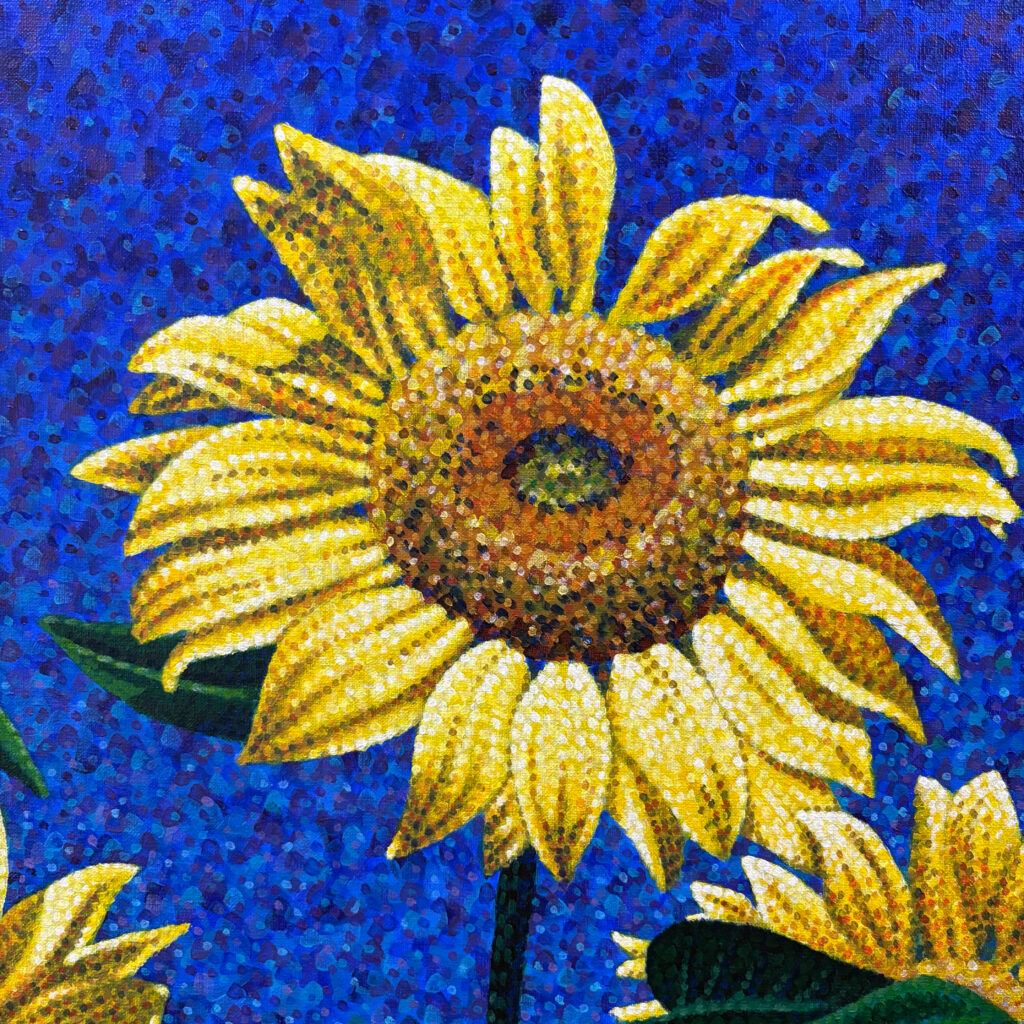
The painting “Yellow Joy” didn’t just come about in the studio; it has a special and distinguished history. The artwork was created specifically at the request of the Flower Art Museum to mark the nationally renowned Aalsmeer Flower Festival.
The assignment was to create a work that captures the beauty, power, and symbolism of flowers in a contemporary way.
An Artistic Dialogue with Van Gogh
When one thinks of sunflowers in art history, Vincent van Gogh inevitably comes to mind. “Yellow Joy” was deliberately designed by Marcel Straver as a respectful yet contemporary reinterpretation of Van Gogh’s world-famous masterpiece, Sunflowers.
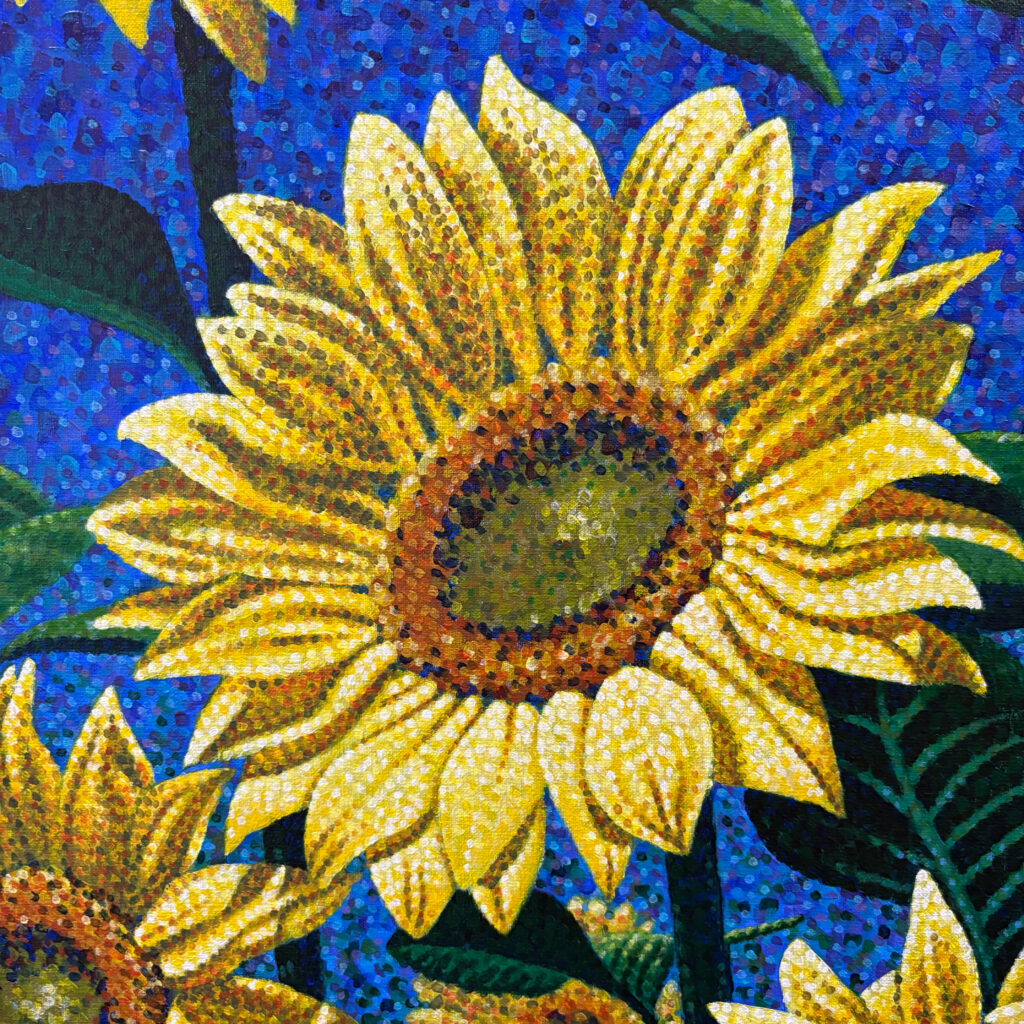
Whereas Van Gogh draws the viewer into an intimate and melancholic still life—in which the flowers stand somewhat wilted in a vase against a predominantly yellow, warm background—Marcel Straver opts for the opposite approach. In “Yellow Joy,” the sunflowers stand tall and strong, in full bloom and set amidst the great outdoors, radiating life, growth, and vitality. Moreover, the flowers are not confined to a yellow-on-yellow composition but are set against a deep, bright blue background. This powerful contrast between the complementary colors of yellow and blue creates an intense visual dynamic and instantly brings to life a summery sense of light and space.
Style & technique
The painting is executed in a modern pointillist style. This means that the image does not consist of clean, uniform surfaces, but is built up from thousands of precisely applied dots of paint, brushstrokes, and layers of color.